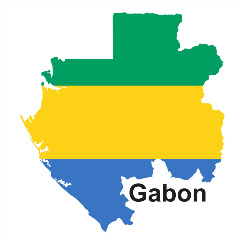
Indepenedence day
17 August
The Portuguese, led by their navigator, Diego Cam, were the first European settlers in Gabon, arriving in 1472. They named the place ‘Gabon’ after the Portuguese term ‘Gabão’ which means ‘cloak.’ Interestingly, the opening of the Como River was also called ‘Rio do Gabao’ or simply ‘Gabao.’ The Portuguese established sugar plantations and developed trade on the mainland. Their trade thrived and spread to most European nations. By the late 1500s, the Dutch, English, French, and Spanish competitors also started trading alcohol, cloth, firearms, and iron goods for ivory, hardwood, and slaves. This slave trade caught the attention of the French colonists, which ultimately became the catalyst for their century-long rule in Gabon.
In 1839, the local ruler in Gabon signed the sovereignty away and granted permission to France to rule the nation. In 1875, a French explorer named Pierre Savorgnan de Brazza started his expedition to Gabon, and in the meantime, he also founded Franceville, one of the largest cities in the country. Gabon officially became a French colony in 1885, and finally one of the four colonies in French Equatorial Africa in 1910.
The French rule faced minor resistance from the citizens of Gabon. However, the forced labor and labor taxes for public health led to considerable interference from the public. Years later, an elite group was formed to promote a ‘pro-French’ but ‘anti-colonialist’ movement. The members of this group went on to become politicians during the Fourth French Republic from 1946 to 1958 when Gabon became an overseas territory of France, but with its own representation and assembly. In 1958, Gabon became an autonomous republic of France. Finally, on August 17, 1960, after a series of multiple cooperation agreements, Gabon was granted complete independence and sovereignty.