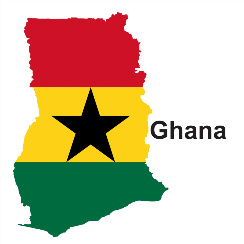
Indepenedence day
6 March
On 6 March 1957, Ghana (formerly the Gold Coast) became the first sub-Saharan African country to gain its independence from European colonisation. Starting with the 1945 Pan-African Congress, the Gold Coast's (modern-day Ghana's) independence leader Kwame Nkrumah made his focus clear. In the conference's declaration, he wrote, "we believe in the rights of all peoples to govern themselves. We affirm the right of all colonial peoples to control their own destiny. All colonies must be free from foreign imperialist control, whether political or economic."
British decolonisation in Africa. By 1970 all were decolonised.
In 1948, three Ghanaian veterans were killed by the colonial police which on a protest march. Riots broke out in Accra and though Nkrumah and other Ghanaian leaders were temporarily imprisoned, the event became a catalyst for the independence movement. After being released from prison, Nkrumah founded the Convention People's Party (CPP), which launched a wide-scale campaign in support of independence with the slogan "Self Government Now!" Heightened nationalism within the country grew their power and the political party widely expanded. In February 1951, the CPP gained political power by winning 34 of 38 elected seats, including one for Nkrumah who was imprisoned at the time. The British government revised the Gold Coast Constitution to give Ghanaians a majority in the legislature in 1951. In 1956, Ghana requested independence inside the Commonwealth, which was granted peacefully in 1957 with Nkrumah as prime minister and Queen Elizabeth II as sovereign.